

What actually happens when you experiment with an invisible rule
I spent three months breaking the rule that was quietly running my business

Hi, I’m Lee and I’m (un)learning in public. 🌟 I work with high-functioning, purpose-led people, helping them to unlearn the invisible rules shaping how they work and live - so they can stop over-carrying, over-performing and reclaim their agency to build a life that actually fits. 🌟 It’s lovely to have you here 😊

When I ripped it all up and started again in 2025, when I began unlearning everything about my business, I realised how fickle the foundations were. I’d been performing flexibility.
It started with my summer sabbatical becoming a working holiday. Then I truncated my Christmas break. My non-working day became optional. My excuses were always reasonable - I’ve got momentum with the pivot, I need to keep it up… I’m launching something soon, so it’s only for a while… I’m enjoying it, it’s not a problem.
I ploughed through on the fumes of excitement.
Yet the signs were there that something wasn’t right. Sluggish mornings where I’d make procrastination an art. Building resentment that I wasn’t getting out the house so much, I wasn’t reading so much, I didn’t have the energy to do all the things I wanted to do.
And as I sat with that discomfort, I realised the invisible rules that were still running the show. The biggest one was years of conditioning that work = 9-5 (and some).
I thought I’d escaped that, but, with my husband still on the corporate train, I was matching his routine. And more than that, there was a guilt and belief that if I tried to work outside of his hours I’d be judged, it would affect our relationship and cause bigger issues.
This was the rule I brought into round 1 of The (Un)learning Lab in January, as I decided to participate in the cohort as well as run it.
The format of the Lab is to surface an invisible rule and then spend three months experimenting in order to break or rewrite the thing that’s getting in our way.
For me, I wanted to see what would happen if I wasn’t constrained by D’s working patterns.
Here’s what happened….

Month 1
My experiment: I decided to focus on playing around with how I started my day, as this is where I felt most of my problems stemmed from. Instead of rushing to be at my desk by 9am, I changed a couple of things - beginning with a workout and then delaying my work start time, using it instead to read and do ‘big thinking’.
I wanted to pay attention to my energy and motivation levels and how they’re impacted by what I do first thing.
The results: I enjoyed a different start to the day. The mornings didn’t drag and I felt more productive when I sat down to work, and sometimes that wouldn’t happen until nearly midday. This meant that I naturally worked later into the evening to match my energy levels.
A big myth debunked was my assumption that D wouldn’t like me working late. The anticipated reaction never came, nor did the guilt I thought I’d feel about ‘wasting’ my evening.
But I did notice a risk around me possibly overworking and I clocked that to pay attention to in month 2.
Month 2
My rule had shifted. With my new flexibility I still wasn’t protecting time for reading, thinking or writing. I was filling it with ‘busy’ work. The rule underneath was that productive time had to look a certain way and be useful to someone in that moment.
My experiment: I wanted to play with structure as an act of protection rather than discipline. I decided to use non-negotiable time blocking for reading and writing and see what the resistance told me when I tried (I knew there’d be resistance!).
The results: The busy work continued to dominate. I was now working at weekends, well into the evenings and I still wasn’t reading or writing in the time I’d created. Completely ignoring my time blocks.
An unplanned coffee shop session with a cuppa and my notebook allowed me to sit with my thoughts. Almost by accident, it became clear that this was what I’d been missing. I’d been trying to schedule my thinking, but the coffee shop didn’t conform to a time block, it got me out and away from the distractions.
I actually didn’t want slower morning routines to read and write. I needed unstructured spaces to think in general, without the pressure to produce something from it.
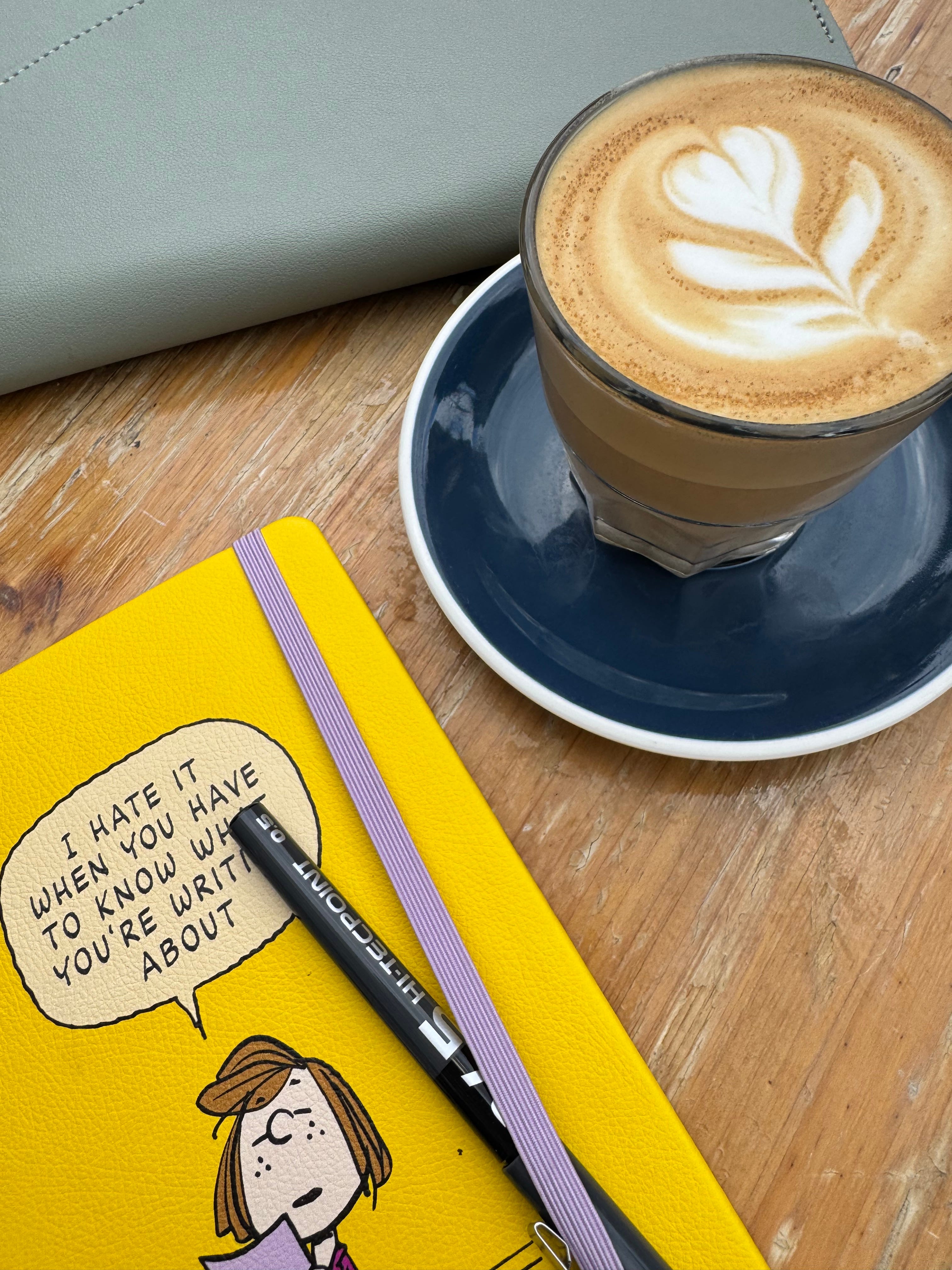
And something else landed; the busy work - the visibility stuff, the content, the admin that underpins getting clients - was an excuse to stay active in the business while I wasn’t fully booked, so I couldn’t feel guilty about not making an effort. But this was creating its own overwhelm and exhausting me in the process.
I’d overcorrected; I’d removed the 9-5 structure I’d been pushing against and all my work boundaries went with it.
In fact I’d disguised this as ‘freedom’.
Month 3
The rule had moved again. It wasn’t about D’s schedule anymore; it was about what I believed productive time was supposed to look like.
The experiment: I wanted to challenge my view of productivity by challenging the amount of work time I made available. I decided to act as if my client books were completely full and see what choices that would force me to make.
I also decided it was time to take a proper break from work.
The results: This one didn’t quite land - but I learnt just as much from it.
I started the month well, deciding my non-negotiable non-client-facing hours and what priority ‘on the business’ work should be. However, I hadn’t factored my time off and what impact that might have had on things piling up - creating a new guilt that I needed to spend more time working to ‘catch up’.
I resisted, but it meant getting back into the swing of things was hard - in particular my visibility online.
I did a lot of overthinking and shaming myself - and in doing that, something that had been invisible but lurking surfaced properly: if I’m not ON all the time then I’m a ‘bad’ business owner.
So where am I now, three months later?
The rule I came into the Lab with - that my working day had to match the rhythm of D’s - I barely think about now.
I’ve debunked a massive belief I’d been carrying for years about what working on my own terms was allowed to look like.
I’ve rewritten my rules around how and when I do my best thinking.
I’ve surfaced another rule about needing to be ‘on’ all the time and what that means for me as a business owner if I’m not. I know that’s where I need to experiment next.
Experiments offer a low-pressure, low-stakes approach to making changes. There’s no right or wrong, whatever you do gives you information, which means there’s always something to try next. And that’s what I’ve found most helpful.
I’ve not got a ‘perfect’ conclusion, but I’ve reclaimed some agency and I’m making decisions on the way I’d like to work NOT because some gurus have said that’s how it should be.
And that’s the point of the Lab and unlearning - it’s tested and surfaced invisible rules I’ve been living and working by and given me the opportunity to try and choose differently.
Lee x
If you’ve been reading this thinking ‘I know exactly what rule I’d bring’ or ‘this resonates but I don’t know where to start’ then come and join us in The (Un)learning Lab for round 2.
We get started again on 27 May. Over three months we surface and experiment with the rules that are quietly getting in your way. You don’t need to have taken part in round 1. This isn’t a group programme, there’s no curriculum, no performance is required. The cohort is kept intentionally small (capped at 12 people).
This is work you do for yourself - but not in isolation.
It’s £150 for the round or join for a whole year (3 rounds) for £400. All the details are here…
I can relate to each one of these rules. Only the 9-5 rule doesn't have anything to do with my husband. It's totally on me.
Such a brilliant idea Lee, and I love how you've done all the work around really following up on the experiment so you fully see the impact.